

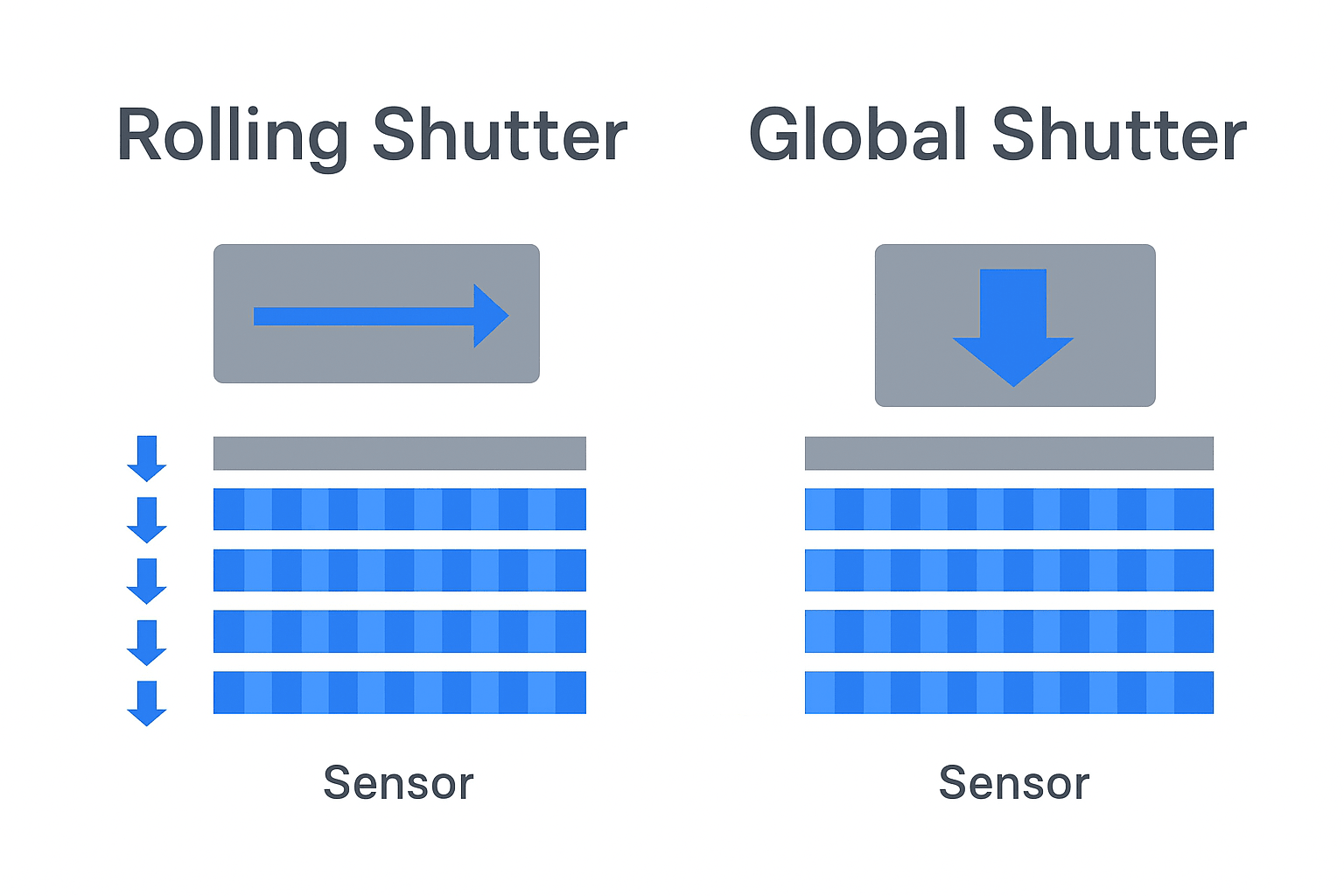
¿Por qué el obturador "rode"?
Obturador de barrido vs. obturador global en cámaras sCMOS — guía rápida para ingenieros y compradores.
En las cámaras de gama alta, más allá del número de píxeles, la tasa de fotogramas y la sensibilidad, hay un detalle crucial que a menudo se pasa por alto — el modo de obturador. En las cámaras sCMOS, los dos tipos más comunes son Obturador de barrido y Obturador global.
Obturador de barrido
Imagine encender las luces en un rascacielos piso por piso. Cada fila de píxeles comienza la exposición de forma secuencial en lugar de simultánea. Esto crea una pequeña diferencia de tiempo entre las filas que puede causar distorsión con movimiento rápido.
Obturador global
Imagine activar un interruptor maestro — todas las luces se encienden a la vez. Todos los píxeles inician y terminan la exposición en el mismo momento exacto, capturando una instantánea real. El resultado: imágenes sincronizadas y sin distorsión incluso con movimiento.
 Ventajas & Desventajas
| Característica | Obturador de barrido | Obturador global |
|---|---|---|
| Ruido | Menor | Mayor (ligeramente) |
| Distorsión con movimiento | Posible | Ninguna |
| Sincronización | Más compleja | Más fácil |
| Tasa de fotogramas máxima | Mayor | Menor |
| Ideal para | Escenas lentas/estáticas, imagen de bajo ruido | Imagen de alta velocidad, sincronizada |
Ejemplo del mundo real
Fotografíe un ventilador girando: con el obturador de barrido, las aspas pueden parecer dobladas o sesgadas; con el obturador global, las aspas permanecen rectas y nítidas — sin distorsión, sin retraso de tiempo.
Cómo elegir
- Verifique la velocidad del objeto: Rápido → Global. Lento/estático → De barrido.
- Necesidades de sincronización: ¿Necesita sincronización de estrobos/láseres/múltiples cámaras? → Global.
- Ruido & tasa de fotogramas: ¿Quiere el menor ruido & mayor FPS? → De barrido.
- Cámaras de doble modo: Muchos modelos sCMOS premium le permiten cambiar entre modos.
Recomendaciones de Rapixel Tech
En Rapixel Tech ayudamos a los clientes a elegir el sensor y la cámara adecuados para su aplicación. Al publicar páginas de productos, incluya siempre un campo claro para Tipo de obturador: De barrido / Global / Conmutable y presente imágenes de comparación de muestra para aplicaciones críticas de movimiento.
Explore las cámaras de Rapixel →
¿Necesita ayuda para elegir?
¿No está seguro de qué modo de obturador se adapta a su proyecto? Contacte a nuestros ingenieros de ventas para una recomendación a medida.
Share:
Cómo las cámaras industriales revolucionan el control de calidad farmacéutico
Precisión en cada fotograma — Las cámaras de alta velocidad de la serie Mars potencian el análisis del movimiento con Kinovea