
News

SWIR Imaging for Wafer Bonding Inspection: Seeing Through Silicon
Discover how short-wave infrared (SWIR) imaging enables non-destructive inspection through silicon. Explore wafer bonding defects, hidden voids, alignment inspection, and Rapixel InGaAs cameras designed for advanced semiconductor imaging systems.
Read moreabout SWIR Imaging for Wafer Bonding Inspection: Seeing Through Silicon

UV TDI Cameras for Wafer Surface Inspection: High-Resolution Defect Detection
Explore how UV Time Delay Integration (TDI) imaging enhances wafer surface inspection. Learn about defect detection challenges, 256-stage TDI technology, and Rapixel's 4K–16K UV line scan cameras for precision semiconductor imaging.
Read moreabout UV TDI Cameras for Wafer Surface Inspection: High-Resolution Defect Detection

Semiconductor Inspection: Advanced Machine Vision Solutions for Wafer & Chip Manufacturing
Explore advanced semiconductor inspection solutions with Rapixel machine vision cameras. From high-resolution wafer surface inspection to UV TDI defect detection and SWIR imaging, discover how industrial imaging technologies support precision, efficiency, and quality control in semiconductor manufacturing.
Telecentric Vision Systems: Integrating Cameras, Lenses, Lighting & Software
Discover how telecentric lenses, industrial cameras, lighting, calibration, and vision software work together to create reliable machine vision systems. Explore practical integration strategies, camera-lens compatibility, illumination design, measurement workflows, and compact AOI solutions for precision industrial inspection.
Read moreabout Telecentric Vision Systems: Integrating Cameras, Lenses, Lighting & Software

Telecentric Lens for Industrial Applications
Explore how telecentric lenses support industrial machine vision across semiconductor manufacturing, electronics inspection, precision-machined components, battery production, and automated AOI. Learn about typical applications, optical challenges, illumination strategies, and key selection considerations for reliable inspection systems.
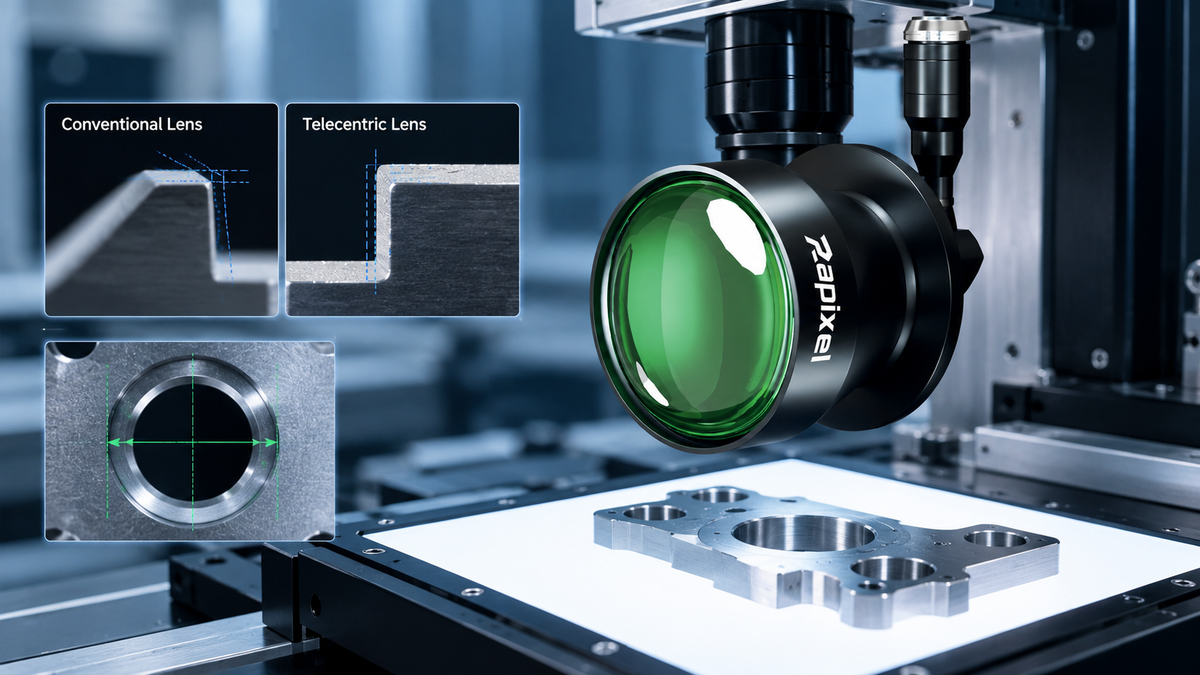
Telecentric Lens for Precision Measurement
Discover how telecentric lenses support precision measurement, dimensional inspection, and repeatable edge detection. Explore object-space resolution, measurement uncertainty, lighting strategies, and practical metrology workflows for industrial machine vision systems.
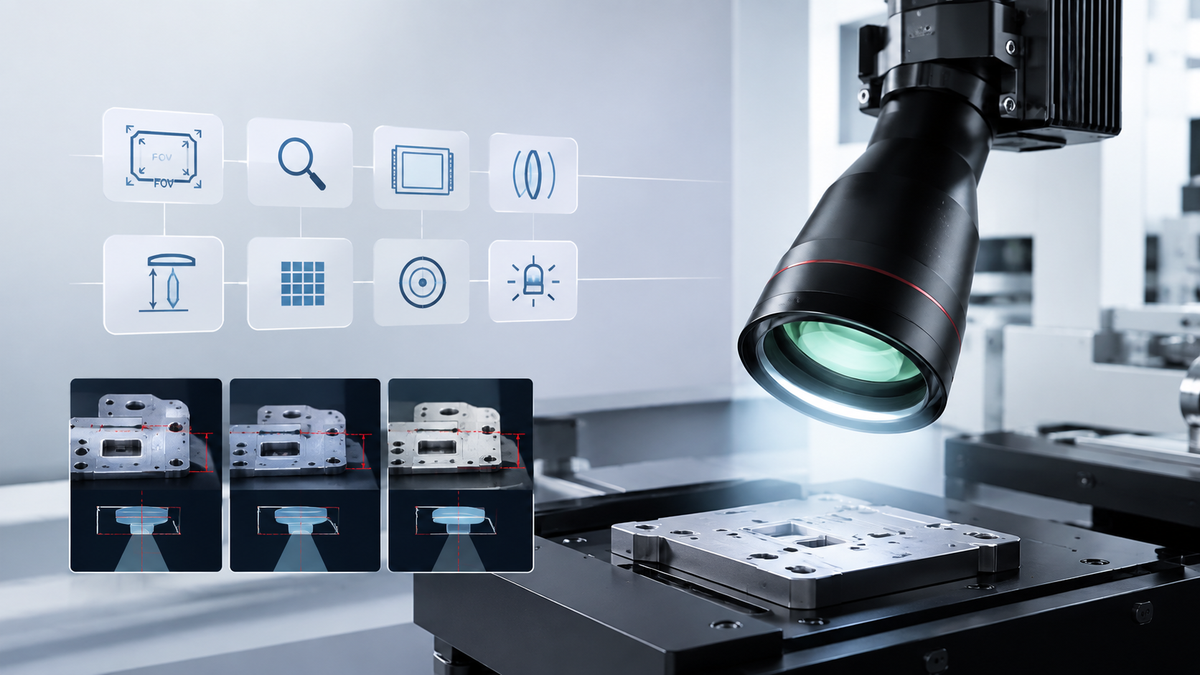
Learn how to choose the right telecentric lens for machine vision based on FOV, magnification, sensor size, working distance, resolution, telecentricity, depth of field, and lighting requirements.
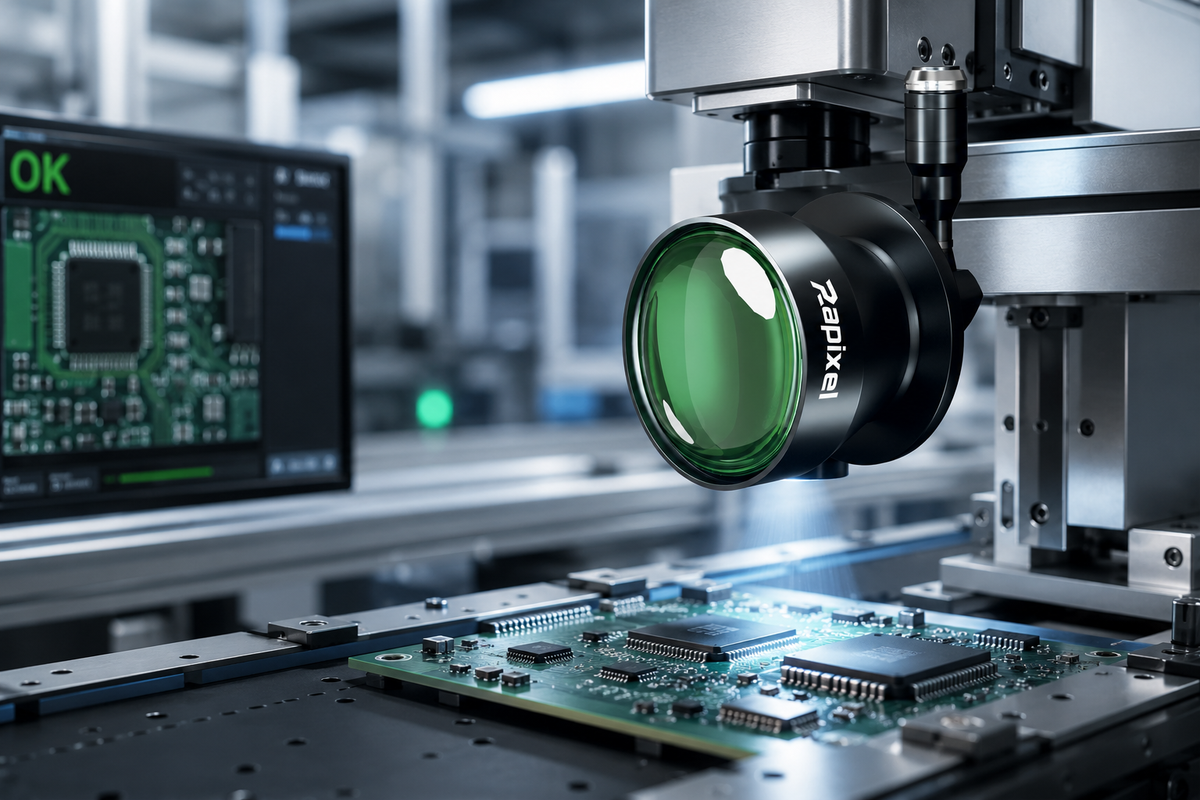
Why Need 90° Telecentric Lens & Light for AOI
Explore how a 90° telecentric lens combined with 90° telecentric lighting can optimize AOI systems where conventional straight optical paths are difficult to integrate. Learn how folded optical configurations improve machine integration while supporting stable imaging, controlled illumination, and precise inspection for PCB, electronics, semiconductor, and industrial applications.
Read moreabout Why Need 90° Telecentric Lens & Light for AOI
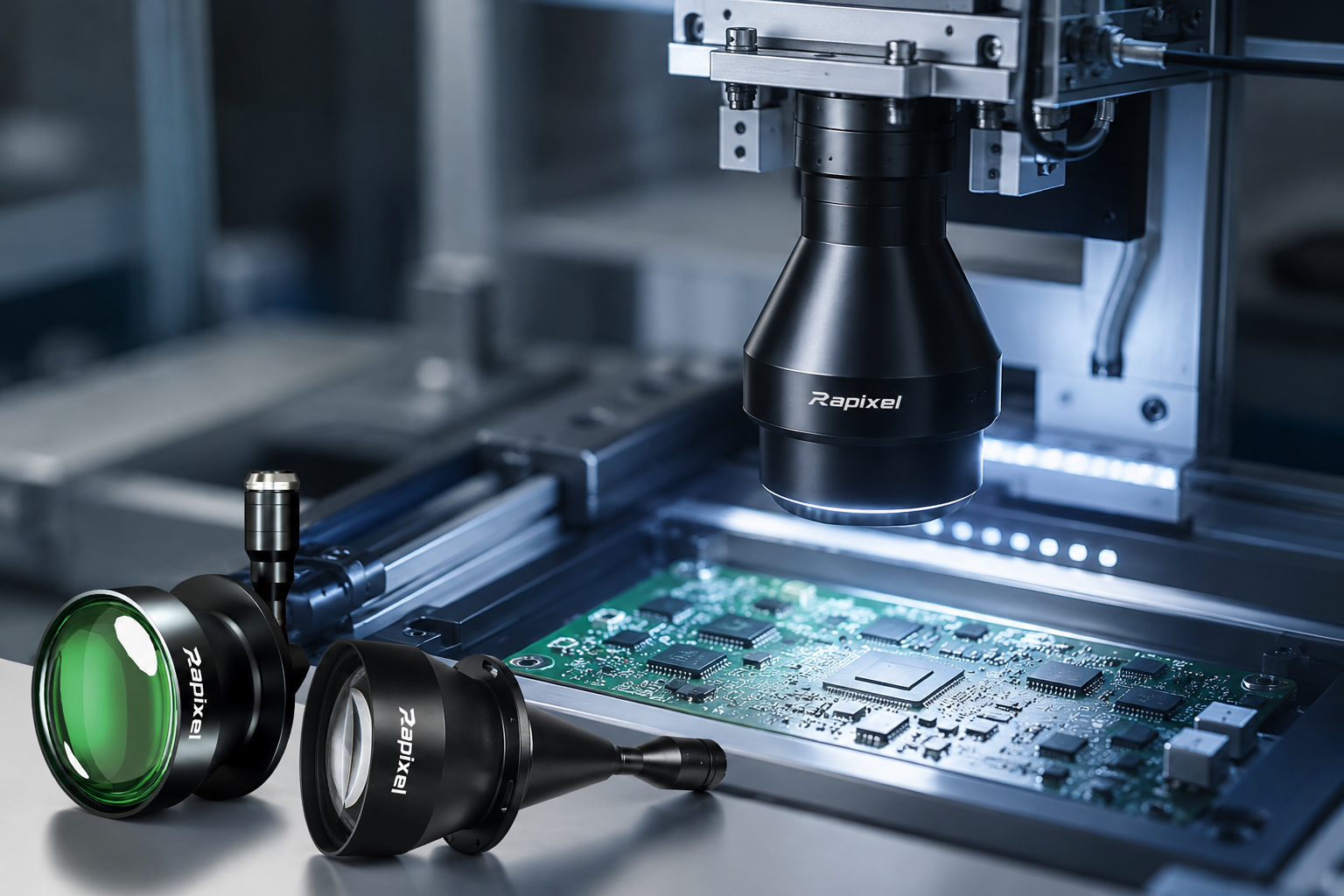
Why AOI Need Telecentric Lens?
Telecentric lenses improve AOI imaging by providing stable magnification, reduced perspective effects, and consistent image geometry. Learn how to combine telecentric lenses, high-resolution cameras, and controlled lighting for PCB, electronics, semiconductor, and precision inspection—including 90° telecentric optical configurations for space-constrained AOI systems.