
ما هو العدسة التيليسنترية؟ دليل عملي للرؤية الآلية
تعلّم كيف تقلّل العدسات التيليسنترية من الأخطاء المتعلقة بمنظور الرؤية، وتثبّت التكبير، وتحسّن اتساق التصوير للقياس الدقيق، والفحص الضوئي الآلي (AOI)، والفحص الصناعي.
ما هي العدسة التيليسنترية؟
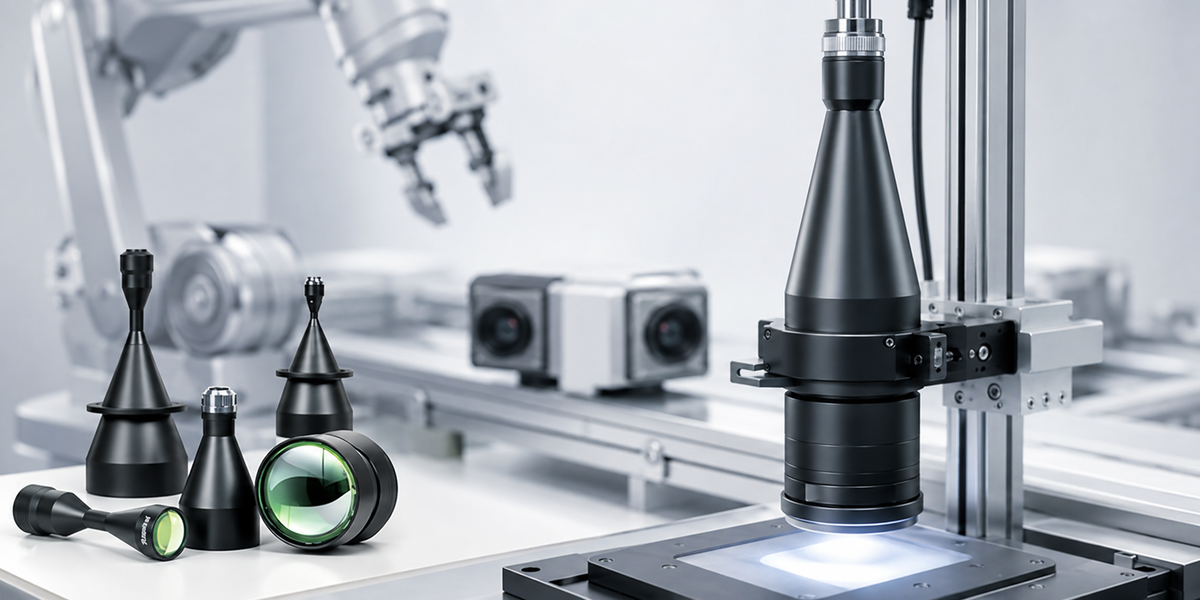
العدسة التيليسنترية هي عدسة بصرية مصممة للحفاظ على تكبير مستقر للغاية ضمن نطاق محدد لمساحة الكائن، مع تقليل التغيرات المتعلقة بمنظور الرؤية في حجم الصورة. هذا يجعل التصوير التيليسنترى مفيداً بشكل خاص لتطبيقات الرؤية الآلية حيث تكون الدقة الأبعاد، وقابلية التكرار، والاتساق الهندسي مهمة.
في الرؤية الآلية الصناعية، الصورة الحادة ليست كافية دائماً. عندما تُستخدم الكاميرا لقياس أو فحص قطعة، يجب أن تمثل الصورة هندسة الكائن بشكل متسق أيضاً.
هنا يمكن لـ العدسة التيليسنترية أن تحدث فرقاً كبيراً. على عكس عدسة الرؤية الآلية التقليدية، صُممت العدسة التيليسنترية لتقليل التغيرات المتعلقة بمنظور الرؤية في التكبير ضمن نطاق تشغيلها المحدد.
النتيجة هي تصوير أكثر استقراراً عندما يتغير موقع الكائن على المحور البصري—وهو ميزة مهمة للقياس الدقيق، والفحص الضوئي الآلي (AOI)، وتطبيقات الرؤية الأخرى الصعبة.
في هذا الدليل
- لماذا تهم تشوهات المنظور في الرؤية الآلية
- ما الذي يجعل التصوير التيليسنترى مختلفاً؟
- التيليسنترية مقابل الانحراف المنخفض
- العدسة التيليسنترية مقابل عدسة الرؤية الآلية القياسية
- متى يجب عليك استخدام عدسة تيليسنترية؟
- معاملات العدسة التيليسنترية الرئيسية
- كيف تعمل الكاميرا والعدسة معاً
- لماذا يهم الإضاءة في التصوير التيليسنترى
- تطبيقات العدسة التيليسنترية الشائعة
- كيف تبدأ في اختيار عدسة تيليسنترية
- الأسئلة الشائعة
1. لماذا تهم تشوهات المنظور في الرؤية الآلية
المنظور جزء طبيعي من التصوير التقليدي. الكائنات الأقرب للعدسة تبدو أكبر، بينما تبدو الكائنات الأبعد أصغر. للتصوير الفوتوغرافي، غالباً ما يكون هذا التأثير مرغوباً. ولكن للرؤية الآلية الدقيقة، يمكن أن يسبب تبايناً غير مرغوب فيه.
فكر في نظام فحص يقيس عرض مكوّن ميكانيكي صغير. إذا تحرك المكوّن قليلاً نحو العدسة التقليدية أو بعيداً عنها، يمكن أن يتغير حجمه الظاهري في الصورة. حتى عندما لم يتغير الجزء الفيزيائي، قد تتغير الأبعاد المقاسة للصورة.
تغيرات موقع الكائن
يتحرك الجزء المفحوص نحو العدسة أو بعيداً عنها.
تغيرات الحجم الظاهري
يمكن أن يسبب المنظور ظهور الميزة الفيزيائية نفسها بأحجام مختلفة.
تباين القياس
يمكن أن تؤثر التغيرات في هندسة الصورة على فحص الأبعاد وقابلية التكرار.
للتطبيقات التي يجب أن تبقى فيها هندسة الصورة متسقة، يصبح تقليل التغيرات في التكبير المتعلقة بالمنظور جزءاً مهماً من تصميم النظام البصري.
2. ما الذي يجعل التصوير التيليسنترى مختلفاً؟
يستخدم التصوير التيليسنترى تصميماً بصرياً متخصصاً لتقليل التغيرات في التكبير الناتجة عن تباينات موقع الكائن ضمن نطاق تيليسنترى محدد.
عملياً، هذا يعني أنه عندما يتحرك الكائن على المحور البصري ضمن نطاق التشغيل المحدد للعدسة، يبقى حجمه الظاهري أكثر استقراراً بكثير مقارنة بالتصوير التقليدي.
تغيرات المنظور
يمكن أن يؤثر مسافة الكائن على حجم الكائن الظاهري وهندسة الصورة.
تكبير مستقر
يبقى التكبير مستقراً للغاية ضمن نطاق مساحة الكائن التيليسنترى المحدد.

3. التيليسنترية مقابل الانحراف المنخفض
التيليسنترية والانحراف البصري يتعلقان بجودة الصورة، لكنهما يصفان خصائص مختلفة. هذا التمييز مهم عند اختيار عدسة لقياس الرؤية الآلية.
يمكن لعدسة الانحراف المنخفض تقليل الانحراف الهندسي مع إنتاج تغيرات في التكبير المتعلقة بالمنظور. صُممت العدسة التيليسنترية خصيصاً لتقليل تأثيرات المنظور ضمن نطاق مساحة الكائن المحدد.
| الخاصية | عدسة الانحراف المنخفض | العدسة التيليسنترية |
|---|---|---|
| الانحراف الهندسي | مصممة لتكون منخفضة | منخفضة جداً عادةً |
| تأثير المنظور | لا يزال موجوداً | مخفض بشدة |
| استقرار التكبير | محدود | عالٍ |
| الاستخدام النموذجي | التصوير والفحص العام | القياس والفحص الدقيق |
4. العدسة التيليسنترية مقابل عدسة الرؤية الآلية القياسية
عدسة الرؤية الآلية القياسية مناسبة للعديد من تطبيقات الفحص العامة. تصبح العدسة التيليسنترية أكثر قيمة عندما يتطلب النظام تكبيراً مستقراً، وهندسة قابلة للتكرار، أو فحص أبعاد دقيق.
| الميزة | العدسة القياسية | العدسة التيليسنترية |
|---|---|---|
| تأثير المنظور | موجود | مخفض بشدة |
| استقرار التكبير | محدود | عالٍ |
| قياس الأبعاد | تطبيقات عامة | تطبيقات دقيقة |
| فحص الحواف | جيد | مناسب للغاية |
| التطبيق النموذجي | الرؤية الآلية العامة | الفحص والقياس الدقيق |
5. متى يجب عليك استخدام عدسة تيليسنترية؟
لا تتطلب كل أنظمة الرؤية الآلية عدسة تيليسنترية. أقوى حالات الاستخدام هي التطبيقات التي تكون فيها هندسة الصورة، واتساق القياس، وقابلية التكرار حاسمة.
القياس الدقيق
فحص أبعاد العرض، والأقطار، والثقوب، والحواف، والمكونات.
فحص AOI
تصوير قابل للتكرار لأنظمة الفحص الضوئي الآلي.
التصوير عالي الدقة
أنظمة تصوير دقيقة تستخدم كاميرات صناعية عالية الدقة.
موقع كائن متغير
فحص قد يتغير فيه ارتفاع الكائن أو موقعه ضمن نطاق التصوير.
6. معاملات العدسة التيليسنترية الرئيسية
يجب أن يبدأ اختيار العدسة التيليسنترية بمتطلبات الفحص بدلاً من نموذج العدسة. يجب مراعاة عدة معاملات بصرية وميكانيكية معاً.
حدد الأبعاد الفيزيائية لمنطقة الفحص.
حدد مقدار الكائن الذي يجب التقاطه.
طابق حجم الكائن مع مستشعر الكاميرا.
أكد مسافة التركيب الميكانيكي المطلوبة.
تأكد من أن العدسة تغطي مستشعر الكاميرا بشكل كافٍ.
طابق أداء العدسة مع حجم بكسل الكاميرا ودقتها.
مهم للقياس الهندسي الدقيق.
خذ في الاعتبار تباين ارتفاع الكائن ومتطلبات التركيز.
7. كيف تعمل الكاميرا والعدسة معاً
الكاميرا عالية الدقة لا تنشئ تلقائياً نظام رؤية آلية عالي الدقة. يجب أن يكون الأداء البصري للعدسة مناسباً لمستشعر الكاميرا ومتطلبات الفحص.
المستشعر & الدقة
حجم المستشعر، وحجم البكسل، والدقة، وخصائص الغالق تؤثر على أداء النظام.
الأداء البصري
يجب أن يتطابق التكبير، ومجال الرؤية (FOV)، ومسافة العمل، والدقة، والانحراف مع الكاميرا والكائن.
جودة الصورة النهائية
يجب تقييم الكاميرا والعدسة كنظام تصوير متكامل.
يصبح هذا مهماً بشكل خاص عند اقتران العدسات التيليسنترية بكاميرات المسح المساحي عالية الدقة لتطبيقات AOI والقياس الصعبة.
8. لماذا يهم الإضاءة في التصوير التيليسنترى
لا يمكن للعدسة التيليسنترية تعويض الإضاءة غير المناسبة. حتى عندما تكون هندسة الصورة مستقرة للغاية، يمكن للإضاءة السيئة تقليل التباين، أو إخفاء العيوب، أو جعل الحواف صعبة الاكتشاف.
لذلك يجب مراعاة هندسة الإضاءة معاً مع العدسة. هذا مهم بشكل خاص عند فحص المعادن العاكسة، والمكونات الدقيقة، والحواف الصغيرة، والثقوب، أو الميزات الأخرى التي يؤثر فيها التباين وتعريف الحواف مباشرة على نتائج الفحص.
راقب كيف يمكن دمج التصوير التيليسنترى والإضاءة المتخصصة للفحص الضوئي الآلي، بما في ذلك التكوينات البصرية المدمجة بزاوية 90°.
استكشف العدسة التيليسنترية لـ AOI →9. تطبيقات العدسة التيليسنترية الشائعة
العدسات التيليسنترية مفيدة بشكل خاص عندما تكون اتساق الأبعاد، والدقة الهندسية، والتصوير القابل للتكرار مهمة.
القياس الدقيق
فحص أبعاد العرض، والأقطار، والثقوب، والحواف، والملامح.
AOI
الفحص الضوئي الآلي للمكونات والأجزاء المصنعة.
الإلكترونيات
لوحات الدوائر المطبوعة (PCB)، والموصلات، وحزم الدوائر المتكاملة (IC)، والمكونات الإلكترونية.
أشباه الموصلات
الفحص والقياس الدقيق لمكونات أشباه الموصلات.
الأجزاء الميكانيكية
فحص المكونات الصغيرة والمصنوعة بدقة.
المكونات البلاستيكية
فحص الأبعاد والحواف للأجزاء المصبوبة الدقيقة.
10. كيف تبدأ في اختيار عدسة تيليسنترية
الطريقة الأكثر موثوقية لاختيار عدسة تيليسنترية هي البدء بكائن الفحص وأداء التصوير المطلوب بدلاً من اختيار عدسة بناءً على التكبير فقط.
الخطوة 1 — حدد حجم الكائن
حدد الأبعاد القصوى لمنطقة الفحص.
الخطوة 2 — حدد مجال الرؤية (FOV) المطلوب
تأكد من تغطية منطقة الفحص بأكملها بهامش مناسب.
الخطوة 3 — أكد مستشعر الكاميرا
تحقق من حجم المستشعر، والدقة، وحجم البكسل.
الخطوة 4 — اختر التكبير
طابق حجم الكائن، ومجال الرؤية (FOV)، وأبعاد المستشعر.
الخطوة 5 — أكد مسافة العمل
تأكد من أن العدسة تناسب مساحة التركيب الميكانيكي المتاحة.
الخطوة 6 — قيّم الدقة والانحراف
أكد أن العدسة يمكنها دعم دقة القياس والفحص المطلوبة.
الخطوة 7 — اختر الإضاءة
خذ في الاعتبار خصائص السطح، والانعكاسات، والتباين، وهندسة نظام الفحص.
حلول العدسة التيليسنترية للرؤية الدقيقة
تطوّر Rapixel حلول الرؤية الآلية الصناعية للتطبيقات التي تتطلب تصويراً مستقراً، وتأثيرات منظور منخفضة، ودقة عالية، وأداء فحص موثوقاً.
يمكن دمج حلول العدسة التيليسنترية مع الكاميرات الصناعية، والإضاءة المتخصصة، وأنظمة الرؤية للقياس الدقيق، وAOI، وفحص المكونات الإلكترونية، وتطبيقات أخرى صعبة.
استكشف عدسات Rapixel التيليسنترية →استكشف دليل العدسة التيليسنترية
اتبع الدليل الكامل من أساسيات التصوير التيليسنترى إلى AOI، واختيار العدسة، والقياس الدقيق، والتطبيقات الصناعية، وحلول أنظمة الرؤية الكاملة.
أساسيات العدسة التيليسنترية
افهم التصوير التيليسنترى، وتأثيرات المنظور، والتكبير، والأساسيات لاختيار العدسة التيليسنترية.
أنت هناالعدسة التيليسنترية لـ AOI
استكشف التصوير التيليسنترى للفحص الضوئي الآلي، والإلكترونيات، ولوحات الدوائر المطبوعة (PCB)، وفحص المكونات الدقيقة.
استكشف تطبيقات AOI →دليل اختيار العدسة التيليسنترية
تعلّم كيف تختار التكبير، ومجال الرؤية (FOV)، ومسافة العمل، وتوافق المستشعر، والأداء البصري.
استكشف أدلة الاختيار →العدسة التيليسنترية للقياس الدقيق
اكتشف كيف يدعم التصوير التيليسنترى قياس الأبعاد، وفحص الحواف، وقابلية تكرار القياس.
استكشف أدلة القياس →العدسة التيليسنترية للتطبيقات الصناعية
استكشف تطبيقات العدسة التيليسنترية عبر أشباه الموصلات، والإلكترونيات، والميكانيكا، والبلاستيك، والتصنيع الدقيق.
استكشف تطبيقات الصناعة →أنظمة الرؤية التيليسنترية & الحلول
تعلّم كيف تعمل الكاميرات، والعدسات التيليسنترية، والإضاءة، وبرمجيات الرؤية معاً في أنظمة الفحص الكاملة.
استكشف حلول الرؤية →الأسئلة الشائعة
ما هي العدسة التيليسنترية؟
صُممت العدسة التيليسنترية للحفاظ على تكبير مستقر للغاية ضمن نطاق محدد لمساحة الكائن، مع تقليل التغيرات المتعلقة بمنظور الرؤية في حجم الصورة. تُستخدم عادةً لتطبيقات الرؤية الآلية الدقيقة.
ما هي استخدامات العدسة التيليسنترية؟
تُستخدم العدسات التيليسنترية عادةً للقياس الدقيق، وفحص الأبعاد، وAOI، وفحص أشباه الموصلات، وفحص الإلكترونيات، وتطبيقات أخرى حيث يكون التكبير المستقر والتصوير القابل للتكرار مهماً.
ما هو الميزة الرئيسية للعدسة التيليسنترية؟
الميزة الرئيسية هي تكبير مستقر للغاية ضمن نطاق محدد لمساحة الكائن، مما يساعد على تقليل التباين المتعلق بالمنظور في تصوير وفحص الأبعاد.
هل العدسة التيليسنترية أفضل من العدسة القياسية؟
ليس بالضرورة. العدسات القياسية غالباً ما تكون أكثر مرونة واقتصادية للتكلفة للفحص العام. العدسات التيليسنترية مفيدة بشكل خاص عندما تكون دقة القياس، والتكبير المستقر، والاتساق الهندسي مهمة.
هل تلغي العدسة التيليسنترية الانحراف؟
التيليسنترية تقلل بشكل رئيسي من التغيرات في التكبير المتعلقة بالمنظور. الانحراف البصري خاصية منفصلة، لذا يجب مراعاة مواصفات التيليسنترية والانحراف معاً للقياس الدقيق.
كيف أختار عدسة تيليسنترية؟
ابدأ بحجم الكائن، ومجال الرؤية المطلوب، وحجم مستشعر الكاميرا، والتكبير، ومسافة العمل، والدقة، والانحراف، وعمق الميدان. يجب أيضاً تقييم متطلبات الإضاءة كجزء من نظام الرؤية الآلية الكامل.
هل تحتاج إلى مساعدة في اختيار عدسة تيليسنترية؟
شارك حجم الكائن، ومجال الرؤية (FOV) المطلوب، ومسافة العمل، ومستشعر الكاميرا، ومتطلبات الفحص. يمكن لـ Rapixel المساعدة في تحديد تكوين تصوير تيليسنترى مناسب.
تحدث إلى خبير الرؤية →
Share:
كيف تُبسّط الكاميرات الذكية بالذكاء الاصطناعي فحص الرؤية الآلية الصناعية
لماذا تحتاج AOI إلى عدسة تيلسنتريكية؟